
Google Ranking Factors Explained: The Ultimate Guide to Search Visibility
The search engine optimization landscape has shifted away from mechanical keyword density. Following major algorithm updates—including the December 2025 Core Update and the volatile March 2026 Core Update—Google’s ranking systems have consolidated around semantic understanding, real-world utility, and AI-summarizable architecture
Today, Google relies on deeply layered, interconnected AI systems like Gemini and RankBrain to measure how effectively a webpage resolves human problems. To build sustainable organic traffic, webmasters must understand the core ranking pillars that move the needle.
Content remains the bedrock of search engine visibility, but the criteria for “high-quality content” have drastically changed. Google now filters indexable text through an infrastructure focused heavily on intent purity and complete experience satisfaction.
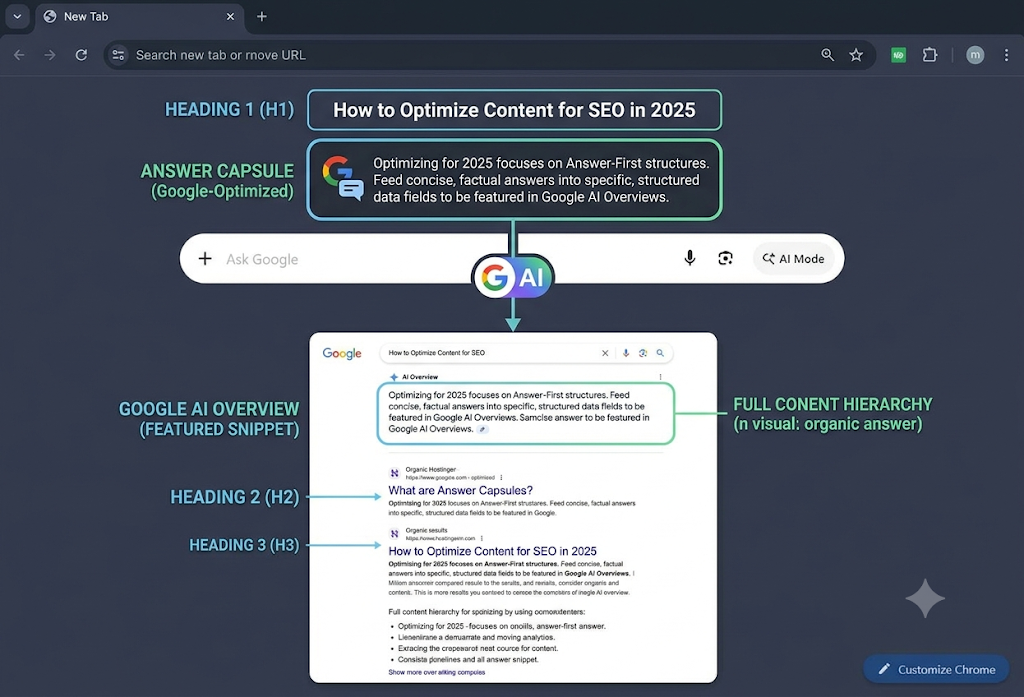
The Rise of “Answer Capsules” for AI Overviews
With Search Generative Experience (SGE) and AI Overviews commanding a substantial portion of informational search real estate, your content must be structurally summarizable. Top-ranking pages place a self-contained “answer capsule”—a 50-to-100-word unambiguous definition or direct resolution—in the very first paragraph directly below the primary heading.Google Algorithm update 2026
Core Pillar 2: Advanced E-E-A-T & Trust Engineering
In an environment saturated by automated text, Google uses its Quality Rater Guidelines to aggressively screen for Experience, Expertise, Authoritativeness, and Trustworthiness (E-E-A-T).
[Experience] -> Firsthand proof & real-world workflows
[Expertise] -> Validated professional credentials
[Authority] -> Digital PR, citations, & entity clout
│
└───► Earns [TRUSTWORTHINESS] (The ultimate ranking multiplier)
Experience as the Primary Vector
The algorithm now detects whether content is written from an empirical, boots-on-the-ground perspective. Pages containing original data, unique case studies, documented step-by-step workflows, and real-world screenshots systematically outperform theoretical, generic text.
Transparent Author Profiles and Entity SEO
Google treats authors, brands, and organizations as distinct “entities” rather than mere text strings. To establish a robust entity profile:
- Incorporate detailed author bios that display clear real-world expertise and credentials.
- Show a real face with explicit headshots rather than generic avatars.
- Implement
OrganizationandPersonschema markup via Schema.org to link your digital profile unambiguously across the web.
Core Pillar 3: Technical SEO and Page Experience
Technical infrastructure is the foundation upon which your on-page and off-page efforts rest. If a site suffers from crawl errors or a frustrating layout, its search rankings will be throttled.SEO In 2026,Search Engine Ranking Factor
Core Web Vitals 2.0
Google measures real-world user interactions through the Chrome User Experience Report (CrUX). Sites must optimize for three distinct performance baselines:
| Metric | Focus Area | Optimal Target Threshold |
| LCP (Largest Contentful Paint) | Initial Loading Velocity | Under 2.5 Seconds |
| INP (Interaction to Next Paint) | Broad UI Responsiveness | Under 200 Milliseconds |
| CLS (Cumulative Layout Shift) | Visual Structural Stability | Under 0.1 |
Crawlability and Site Architecture
A clean codebase and transparent structural architecture ensure search engine crawlers can efficiently discover your highest-value content.
Mobile-First Indexing: Websites must scale flawlessly across modern mobile viewpoints, minimizing intrusive pop-ups or layout shifting on mobile browsers.
XML Sitemaps: Keep clean, dynamic sitemaps submitted directly within Google Search Console to direct Googlebot efficiently.
Secure Browsing: Valid HTTPS implementation is mandatory for data encryption and user safety signals.
Core Pillar 4: Topical Authority and Link Equity
Isolated keywords have minimal impact if a domain lacks structural contextual depth. Google analyzes entire networks of related documents to measure topical ownership.
Content Hubs and Semantic Clusters
Rather than writing disjointed articles, organize your content into strict hub-and-spoke models. A comprehensive pillar page covers a topic broadly, while tightly structured sub-pages dive deep into specific components. These pages are knit together using contextual internal links to signal deep topical authority to search spiders.
Quality-First Backlink Profiles
Backlinks remain a primary off-page validation signal, but the focus is strictly on quality and contextual relevance rather than raw link volume.
Editorial Mentions: Naturally earned links from authoritative niche publications provide the highest ranking boost.
Entity-Based Anchor Text: Using natural brand names or contextually accurate phrases instead of highly repetitive exact-match keywords prevents algorithmic spam triggers.
Devaluation of Schemes: Scaled link exchanges, low-tier directory submissions, and purchased placements are filtered out efficiently by automated spam detection systems.SEO & Google Algorithm Updates 2026
Conclusion: Crafting a Balanced Organic Strategy
Achieving high visibility requires a symbiotic balance across all four pillars. A fast website with thin content will fail to rank, just as exceptional content will suffer if it is buried under a broken, un-crawlable site architecture. Focus on delivering unequivocal value to human readers, organizing information cleanly for AI summary systems, and solidifying technical foundations to sustain organic growth long into the future.
Frequently Asked Questions Regarding Rankings
Does keyword density still matter for search algorithms?
Keyword density has a negligible correlation with high rankings. Focus instead on using natural variations, synonyms, and relevant entities that satisfy semantic context.
How often should I update older blog posts?
Audit your high-impact pages quarterly. Updates should focus on improving accuracy, integrating updated statistics, expanding structural depth, and fixing broken links rather than simply updating the publication timestamp