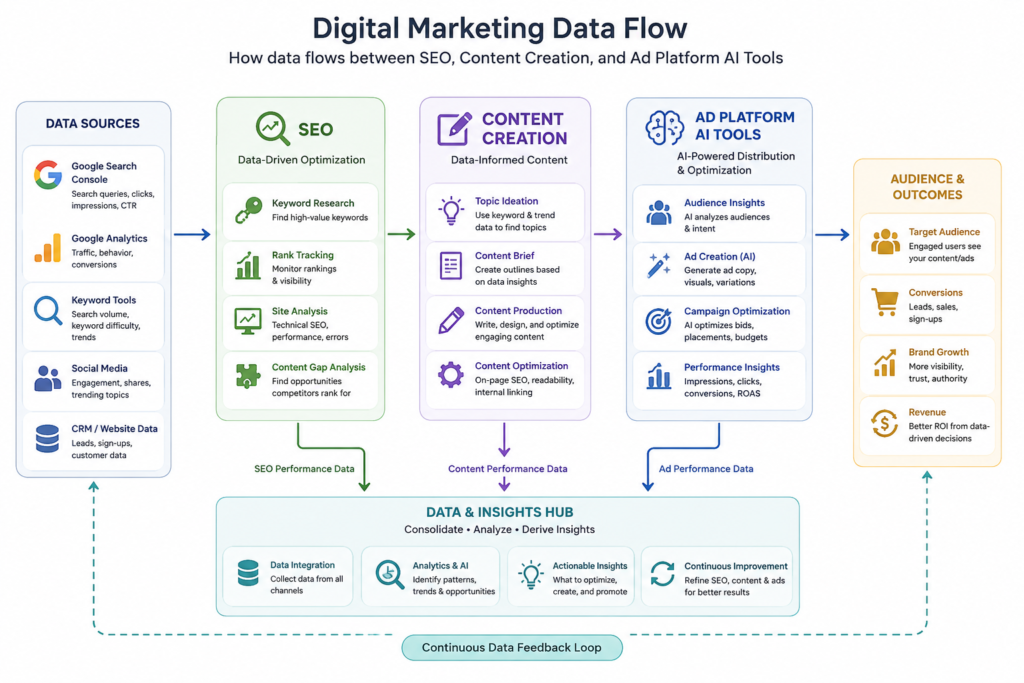
The digital marketing landscape is shifting at a breakneck pace. Inside a single afternoon, a marketing team can research keywords, draft optimized copy, generate hyper-realistic brand imagery, and deploy hyper-targeted ad variations—all thanks to artificial intelligence. If you are still relying entirely on manual workflows, you are losing valuable hours to your competition.
AI is no longer just a futuristic concept or a shortcut for basic text generation; it is the infrastructure driving modern business growth. To stay ahead, you need a highly optimized tool stack that supercharges your strategy across SEO, content creation, social media, paid advertising, and analytics.
This comprehensive guide breaks down the absolute best AI tools for digital marketing available today, offering practical examples, workflow integrations, and actionable insights to help you maximize your ROI.
Why AI is No Longer Optional in Digital Marketing
The integration of artificial intelligence into marketing strategies has shifted from an experimental competitive advantage to an absolute necessity. Marketers who master these tools aren’t replacing their human creativity; they are amplifying it.
Boosting Efficiency and Scalability
The most immediate benefit of deploying AI in your marketing workflow is the sheer acceleration of output. Tasks that historically required days of cross-departmental collaboration—such as audience segmentation, creative asset scaling, and structural content mapping—can now be initiated in seconds. This allows small teams to execute enterprise-level campaigns without scal
Predictive Data-Driven Decision Making
Beyond automation, AI excels at processing vast pools of data to uncover patterns that humans might miss. Instead of launching campaigns based on historical guesswork, modern AI engines analyze real-time user behavior, predict conversion probabilities, and automatically adjust bidding strategies or content delivery to match shifting consumer intent.
Best AI Tools for Content Creation and Copywriting
Content remains the king of digital marketing, but consistency is its greatest challenge. These AI copywriting platforms solve the blank-page syndrome and help scale high-quality text assets.
1. ChatGPT & Claude (Anthropic) – Best for Deep Conceptualization and Long-Form Copy
While ChatGPT (specifically models like GPT-4o) remains an industry staple for structural planning, data parsing, and conversational copy, Anthropic’s Claude has captured massive market share for its highly nuanced, human-like tone and exceptional handling of complex brand voices.
Best Used For: In-depth blog post outlines, landing page copy, email newsletters, and behavioral persona generation.
Key Advantage: Advanced contextual understanding that avoids generic, robotic phrasing.
Real-World Example: A SaaS brand uses Claude to ingest their 50-page brand guidelines document, instantly generating a month’s worth of highly aligned email marketing sequences that match their specific tone.
2.Jasper AI – Best for Full-Scale Marketing Campaigns
Jasper is built explicitly for enterprise marketing teams. Unlike general-purpose chatbots, Jasper offers end-to-end campaign builders that maintain brand voice across multiple channels simultaneously.
Best Used For: Multi-channel product launches, ad variants, and social captions.
Key Advantage: Integrated “Brand Voice” memories that scan your website to ensure consistent messaging.
Best AI Tools for SEO and Keyword Research
Search engine optimization requires a meticulous balance of user intent, technical precision, and content depth. These AI engines remove the guesswork from search engine algorithms.
Tool Name
Primary Marketing Superpower
Best Target Audience
Surfer SEO
On-Page Semantic Optimization
Content Writers & Bloggers
Semrush (Copilot)
Competitive Intelligence & Audit
Agency Growth Specialists
Perplexity Pages
Rapid Topical Authority Mapping
SEO Strategists & Research
1. Surfer SEO – Best for Semantic Content Optimization
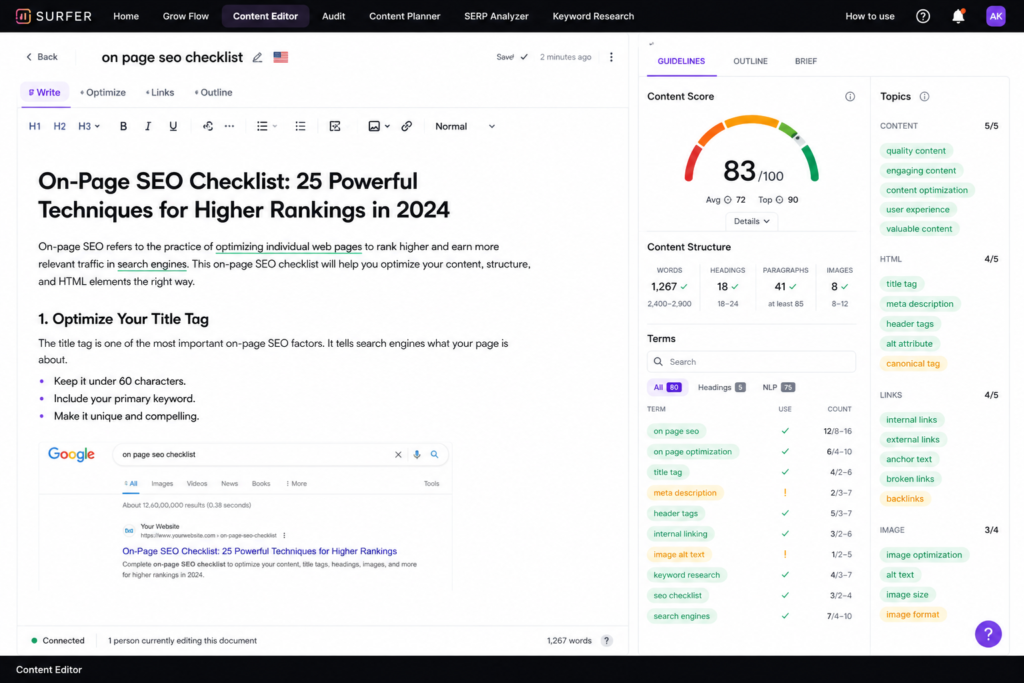
Surfer SEO uses AI to analyze real-time search engine results pages (SERPs) for your target keyword. It provides a real-time content score based on NLP (Natural Language Processing) terms, word count, structural headings, and image density.
Input Target Keyword: Enter your main keyword (e.g., best ai tools for digital marketing).
Analyze Content Score: Write directly inside the editor while the AI monitors keyword frequency against ranking competitors.
Optimize Structure: Follow the AI’s exact instructions regarding missing subheadings and semantic phrases.
2.Semrush AI Copilot – Best for Competitive Intelligence
Semrush has layered advanced machine learning onto its massive search index. The AI Copilot proactively flags ranking drops, monitors competitor backlink shifts, and suggests immediate technical fixes for your website.
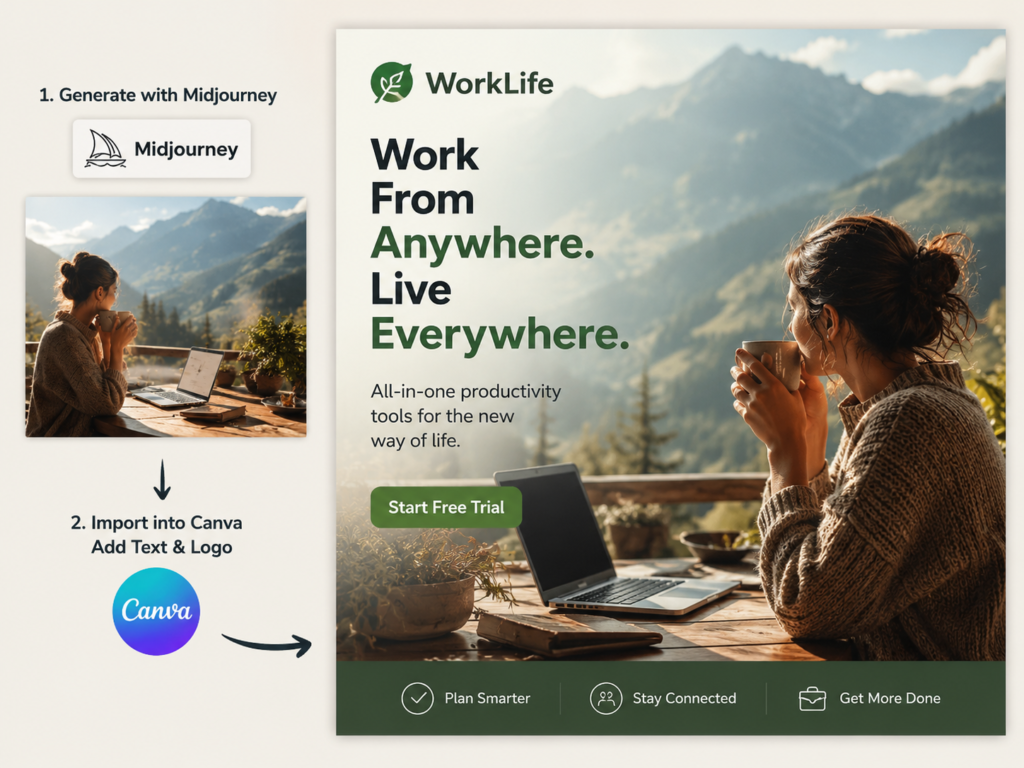
1.Midjourney & Canva AI – Best for Brand Visuals and Ad Creatives
Midjourney offers unparalleled artistic control for generating photorealistic or highly stylistic image assets from simple text prompts. When paired with Canva’s intuitive AI-powered Magic Studio, teams can quickly upscale, extend, or background-strip graphics for instant deployment.
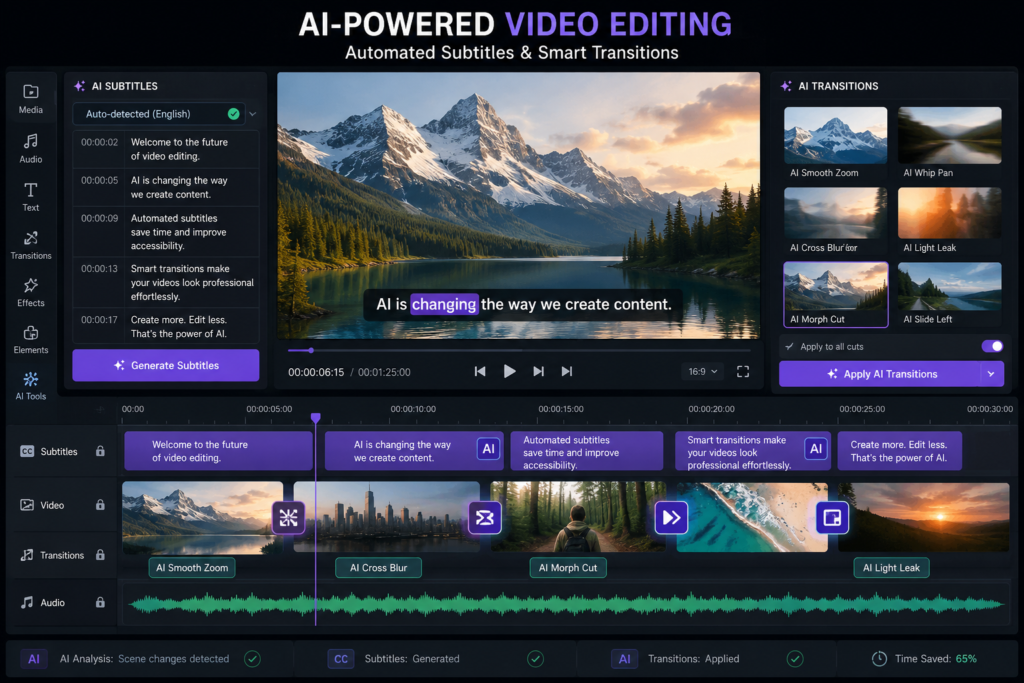
2.Runway – Best for Short-Form Video Automation
With , YouTube Shorts, and Instagram Reels dominating engagement metrics, video agility is crucial. Runway allows marketers to generate or extend video clips using text or image prompts,
Best AI Tools for Data Analytics and Paid Ads
Paid traffic requires tight optimization loops. Letting machine learning handle bidding and variation testing can save thousands in wasted ad spend.
1.Albert AI – Best for Autonomous Programmatic Advertising
Albert acts as an artificial intelligence marketing ally that plugs directly into your enterprise ad accounts (Google, Meta, Bing). It analyzes cross-channel performance data to automatically reallocate budgets, test copy combinations, and optimize audience targeting in real-time.Albert acts as an artificial intelligence marketing ally that plugs directly into your enterprise ad accounts (Google, Meta, Bing). It analyzes cross-channel performance data to automatically reallocate budgets, test copy combinations, and optimize audience targeting in real-time.
The Result: Eliminates manual A/B testing cycles by testing hundreds of variables simultaneously.
2.Google Analytics 4 (GA4) Predictive Insights
Many marketers overlook the native AI capabilities built right into GA4. The platform leverages predictive metrics to identify purchase probabilities, churn risks, and expected revenue trends from specific user cohorts, giving you the foresight to adjust retention campaigns early.
How to Choose the Right AI Marketing Stack for Your Business
Building your ideal toolkit isn’t about buying every subscription on the market; it’s about solving your specific operational bottlenecks. Follow this framework to pick your tools:
Identify Your Core Bottleneck: If your team struggles to produce enough articles, prioritize Surfer SEO and Claude. If you are wasting money on underperforming ads, invest in Albert AI.
Check Integration Capabilities: Ensure your AI tools communicate smoothly with your existing CRM (like HubSpot or Salesforce) and CMS (like WordPress).
Prioritize Data Privacy: Ensure the enterprise tools you use do not use your proprietary customer data or company briefs to train public models.
(H2) Frequently Asked Questions
1.Will using AI tools for content creation hurt my Google SEO rankings?
No, not if the content is highly valuable, accurate, and original. Google’s search guidelines explicitly state that they reward high-quality content, however it is produced. The risk comes from publishing low-effort, unedited AI text that fails to provide real utility or satisfy user search intent. Always infuse human editing, unique perspectives, and factual verification.
2.Are free AI tools like the basic version of ChatGPT sufficient for digital marketing?
Free tools are excellent for brainstorming, drafting basic outlines, and learning prompt engineering. However, paid marketing platforms offer dedicated features like real-time internet browsing, API connections, team collaboration spaces, and custom brand voices that are absolutely necessary for scaling business operations efficiently.
3.How do AI tools protect my brand’s proprietary data?
Most reputable enterprise AI tools offer strict data privacy policies. Enterprise-tier accounts generally guarantee that your inputs, prompts, and customer data are completely isolated and never utilized to train public machine learning models. Always read the privacy policy of any tool before uploading sensitive consumer records or proprietary documents.
4.What is the learning curve for implementing AI tools in an existing marketing team?
Most modern AI platforms feature highly accessible, conversational interfaces or visual drag-and-drop workflows. A marketing team can typically master basic features within a few days. The true learning curve lies in mastering prompt engineering and building custom workflows, which usually takes a few weeks of consistent, hands-on experimentation.
Conclusion & Next Steps
Artificial intelligence is completely redefining the limits of digital marketing scalability. By automating repetitive tasks, identifying hidden trends in your analytics data, and optimizing your search footprints, the right tools allow you to focus entirely on high-level strategy and creative differentiation.
Don’t let tool fatigue stall your progress. Pick one operational bottleneck today—whether it’s scaling your social media presence, speeding up your blog writing, or tightening your ad performance—and deploy a dedicated AI tool to streamline it.
Ready to transform your organic strategy? Start tracking your search footprint with an advanced optimization platform and build automated, high-performing campaigns that convert.
Unlock Your Growth Potential: Take Action Today
The gap between companies using AI and those relying on manual workflows is widening daily. You don’t need to rebuild your entire marketing infrastructure overnight, but you do need to start.
Choose Your First AI Pilot Project
To avoid analysis paralysis, select one specific area of your marketing funnel to upgrade this week:
For SEO Growth: Run your top 3 underperforming blog posts through Surfer SEO and apply the real-time semantic recommendations.
For Content Scaling: Connect Claude to your brand guidelines and generate a 5-part email welcome sequence.
For Ad Optimization: Review your GA4 Predictive Insights to identify high-value customer segments for your next ad campaign.
Don’t get left behind. Pick your tool, launch your first AI-assisted campaign, and start scaling your digital marketing ROI today.
Structural Markdown Tag Reference
As requested, here is the structural breakdown of the headings used to compile this guide:
Heading 1 (H1): Main article title (The Ultimate Guide to the Best AI Tools for Digital Marketing).
Heading 2 (H2): Primary structural divisions (e.g., Core tool categories, FAQs, and this Conclusion/CTA).
Heading 3 (H3): Granular sub-sections, individual tool profiles, and specific step-by-step action items.
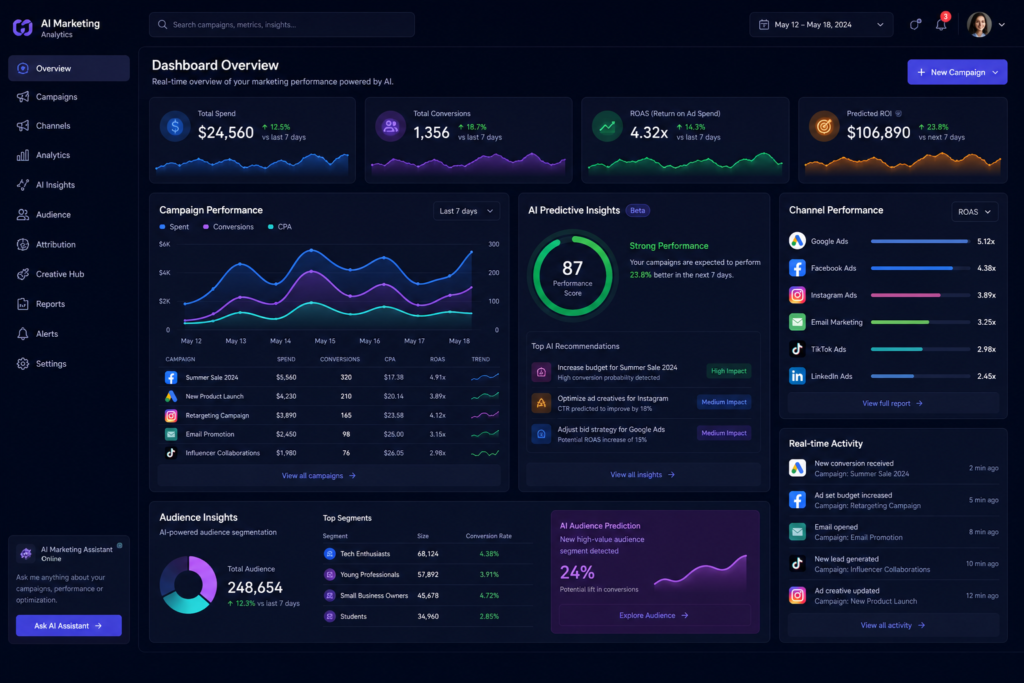
![Jasper AI dashboard showing a multi-channel campaign workspace turning a single brief into a blog post, Facebook ad, and email newsletter simultaneously]](https://spgrowix.com/wp-content/uploads/2026/06/ChatGPT-Image-Jun-19-2026-04_32_14-PM-1024x683.png "The Ultimate Guide to the Best AI Tools for Digital Marketing")
![Google Analytics 4 dashboard highlighting the predictive metrics tab showing user churn probability trends]](https://spgrowix.com/wp-content/uploads/2026/06/ChatGPT-Image-Jun-19-2026-05_16_08-PM-1024x683.png "The Ultimate Guide to the Best AI Tools for Digital Marketing")