
In today’s hyper-competitive digital landscape, having a stunning website is only half the battle. The real challenge? Getting your target audience to actually find it.
If your business isn’t appearing on the first page of search engine results, you are leaving money on the table. That is where Search Engine Optimization (SEO) comes in. Whether you are launching a new brand or trying to scale an existing one, understanding the core pillars of SEO is the single most effective way to drive sustainable, long-term traffic to your website.
Here is everything you need to know to master SEO and grow your organic footprint this year.
What Exactly is SEO?
At its core, SEO is the practice of optimizing your website so that search engines like Google can easily understand your content, recognize your authority, and rank your pages higher for relevant search queries.
Unlike paid advertising, which stops delivering results the moment you turn off the budget, SEO is a long-term investment. When done right, it acts as a 24/7 digital sales rep that consistently brings qualified leads to your doorstep.
The 3 Pillars of a Successful SEO Strategy
To build an organic growth engine that lasts, you need a balanced approach focusing on three main areas:
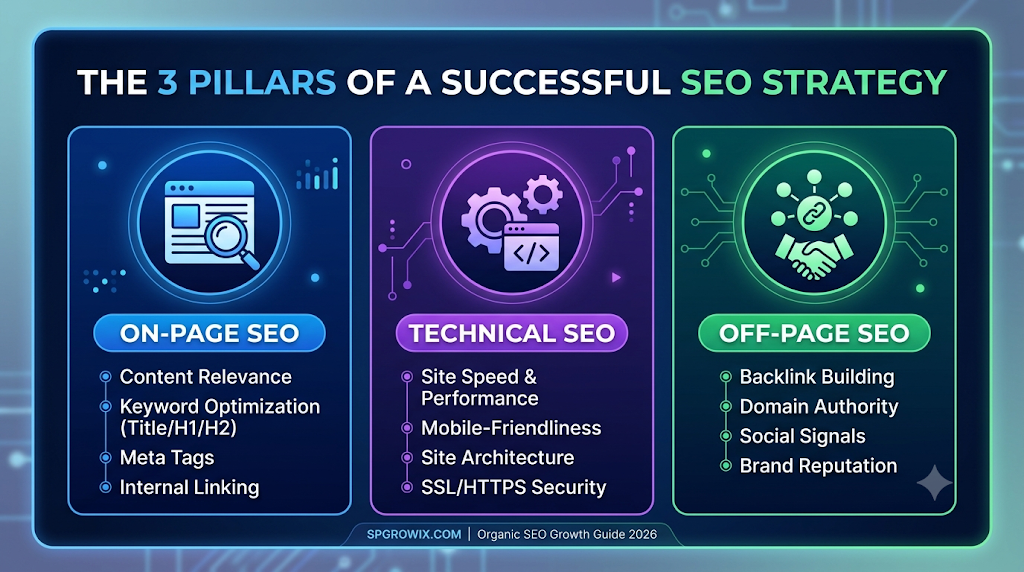
1.On-Page SEO (Content & Keywords)
On-page SEO is all about what is visible on your website. It starts with understanding what your customers are actually searching for.
Keyword Research: Identify high-intent keywords that match what your target audience is typing into search bars.
High-Value Content:https://spgrowix.com/freelancing-kaise-shuru-karein-2026-mein-ghar-baithe-paise-kaise-kamayein/ Google rewards content that solves user problems. Write comprehensive, engaging, and original pieces.Smart Structuring: Use clear headings (H2, H3), short paragraphs, and relevant internal links to make your content easy to read for both humans and search crawlers.
- Smart Structuring: Use clear headings (H2, H3), short paragraphs, and relevant internal links to make your content easy to read for both humans and search crawlers.
2. Technical SEO (The Engine Under the Hood)
You can have the best content in the world, but if your website takes 10 seconds to load, users—and search engines—will abandon it.
- Site Speed: Optimize images and clean up code to ensure rapid loading times.
- Mobile Optimization: Over 60% of global search traffic comes from mobile devices. Your site must look and function flawlessly on smartphones.
- Secure Browsing: Ensure your site uses HTTPS encryption to protect visitor data and earn search engine trust.
3. Off-Page SEO (Authority & Trust)
Off-page SEO focuses on building your website’s reputation across the broader internet.
Backlinks: Think of backlinks as “votes of confidence.” When other reputable websites link back to your content, it signals to Google that your site is a trusted source of information.
Local SEO: If you serve a specific geographic area, optimizing your local listings (like Google Business Profile) is crucial for capturing nearby customers.
Why Organic SEO Beats Paid Ads in the Long Run
While paid ads offer a quick spike in traffic, they can quickly become expensive. Organic SEO offers distinct advantages:
Higher Trust: Users naturally trust organic search results more than sponsored ads.
Compounding ROI: A blog post written today can continue to attract traffic, leads, and sales years down the line without any additional ad spend.
Cost-Effective Scalability: As your rankings improve, your traffic grows exponentially, significantly lowering your overall customer acquisition costs.
Ready to Scale Your Digital Presence?
SEO isn’t a one-time project; it is a continuous journey of optimization and adaptation. By focusing on delivering real value to your audience and maintaining a technically sound website, you’ll lay the groundwork for massive organic growth.
Need help setting up your website’s ServicesSEO strategy? Let’s connect and build a tailored roadmap to get your brand the visibility it deserves.